A Comprehensive Guide to Reno Car Accident Liability and Evidence
If you’ve recently experienced a car accident in Reno, proving who was at fault is essential for securing the compensation you deserve. Nevada follows a fault-based system, which means the driver responsible for causing the accident is financially liable for damages. In car crashes, determining who is at fault is crucial because it directly affects the legal and financial responsibilities of each party involved. Being at fault means you carry the financial responsibility for covering damages and injuries resulting from the accident. However, understanding and proving liability—especially under Nevada’s unique legal landscape—can be challenging if you’re unfamiliar with the local laws or unsure of what evidence you need.
In this comprehensive guide from Brent Harsh Law, you’ll learn how Reno car accident liability can be established, what evidence is necessary, and how a skilled attorney can support your claim every step of the way. Determining fault is a critical step in car accident cases, as it influences both legal outcomes and the compensation you may receive. Whether you’re planning to file an insurance claim or pursue compensation through the courts, this resource breaks down legal concepts in plain language—empowering you to make informed decisions after an accident.
Understanding Reno Car Accident Liability
Liability refers to legal responsibility for an accident and its resulting damages. In car accident cases, proving liability is the key to holding the appropriate party (or parties) accountable and recovering compensation for your injuries, repairs, lost wages, and more. Establishing liability in a car accident lawsuit involves legal proceedings where fault is determined based on evidence such as police reports, witness statements, and driver conduct.
The negligent party, or the individual responsible for causing the accident through careless or reckless actions, is typically held accountable in car accident cases.
Nevada’s Fault-Based Car Accident System: Who Pays for Damages?
Unlike some states that use no-fault insurance rules, Nevada is a fault-based, or “tort,” state. Nevada operates as an at fault state, meaning the driver who is found to be at fault for the accident is responsible for covering the resulting damages.
- Injured parties must prove liability in order to claim compensation from the at-fault driver.
- Fault is determined by examining the actions of all parties involved, relevant traffic laws, and available evidence.
Car Accident Legal Concepts: Duty of Care, Negligence, and Comparative Fault in Reno
Let’s break down some important legal terms you’ll encounter in a Reno car accident case:
When determining fault and negligence in a car accident, courts look at whether a party breached their legal duty to act with care, which can establish liability.
2.2.2 Negligence
Negligence can broadly be defined as the failure to act as a reasonably careful person would under similar circumstances. A driver’s negligence, such as failing to obey traffic laws or driving distracted, can result in liability for any resulting damages. If someone breaches their duty of care and causes an accident, they may be held legally responsible for the injuries and losses that result.
Negligence occurs when a driver fails to uphold their duty of care, resulting in harm to another person. Examples of negligence in Reno car accidents include:
- Running a red light at the intersection of S. Virginia Street and Plumb Lane
- Failing to yield at a busy Midtown crosswalk
- Texting while driving near UNR or downtown
To prove negligence, you must show:
- The other driver owed you a duty of care
- They breached that duty (by acting unsafely or breaking traffic laws)
- That breach caused the accident and your injuries
- You suffered damages (medical bills, vehicle repair costs, lost wages, etc.)
2.2.1 Duty of Care
The duty of care is the obligation to avoid causing unnecessary harm to others. Under the law, drivers are expected to exercise reasonable care to prevent accidents and protect others on the road.
Duty of Care
Every driver on Nevada roads has a duty of care—a legal obligation to drive safely and avoid putting others in harm’s way. This includes obeying traffic laws, avoiding distractions (like texting), and adjusting speed for weather or traffic conditions commonly seen on Reno’s highways and city streets.
Comparative Fault in Nevada
Nevada applies a rule called modified comparative fault, also known as comparative negligence. Under this system, fault is apportioned based on each party’s degree of responsibility:
- Each party’s percentage of fault is determined
- You can recover damages only if you were less than 50% at fault
- Your compensation is reduced by your own degree of fault
Example: If you’re found 20% responsible in a $10,000 accident, your maximum recovery is $8,000.
For a deeper look at Nevada’s comparative fault, visit the Nevada Revised Statutes: NRS 41.141.
Types of Evidence That Prove Liability in Reno Car Accidents
To succeed in a Reno car accident liability claim, strong evidence is key. Valuable evidence, such as police reports, accident scene photos, and witness statements, is essential to support your case. Compelling evidence can make a significant difference by clearly demonstrating liability, damages, and negligence, which increases your chances of securing fair compensation. The more concrete proof you have pointing to the at-fault driver’s mistakes, the better your chances are of receiving a fair settlement.
Essential Evidence to Gather
Here’s what you or your attorney should collect to build a strong case:
3.1.1 Police Report
A police report is often the most important piece of evidence in a car accident case. It contains the officer’s observations, statements from those involved, and sometimes the officer’s opinion about who was at fault. It can also include photographs and witness statements. Relevant documentation, such as police reports and related records, is crucial for establishing liability and supporting your claim.
3.1.2 Eyewitness Statements
Eyewitness statements are critical in establishing fault and supporting your claim. Collecting and preserving these statements without pressure or leading questions ensures their credibility and usefulness in legal proceedings.
3.1.3 Photos and Videos
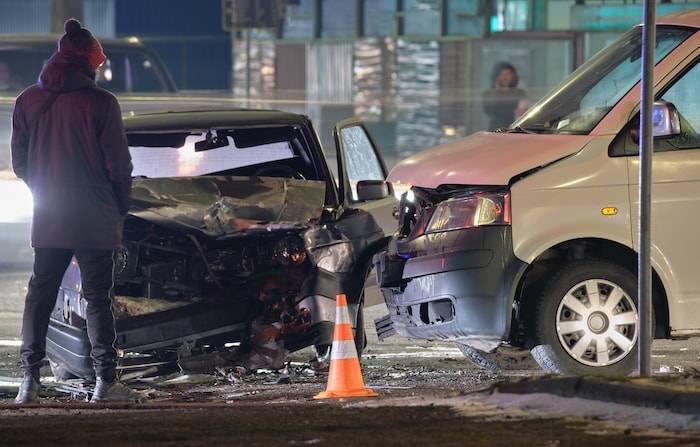
Take photos and videos of the accident scene, vehicle damage, injuries, and road conditions. Physical evidence, such as damaged clothing or other tangible items at the scene, can help substantiate your claim. Be sure to document relevant details like the position of the vehicles, skid marks, and weather conditions. Capture other relevant details, such as visible injuries, property damage, and environmental factors, to provide a comprehensive visual record. Don’t forget to photograph traffic signs, which can illustrate violations or support claims of negligence. Document speed limit signs to help establish driving conditions and vehicle speeds. If applicable, include evidence of red lights to demonstrate potential traffic violations.
3.1.4 Accident Reconstruction
Accident reconstruction experts can analyze the evidence to determine how the accident happened and who was at fault. They consider other factors such as scene analysis, damage patterns, and skid marks to reconstruct the collision and establish liability.
3.1.6 Types of Accidents
Certain types of accidents, such as rear-end collisions, often provide clear evidence of fault due to the nature of the impact and damage.
Police Reports
- Officers who respond to the scene will create a detailed report documenting the accident.
- These reports often indicate fault, note citations issued (e.g., running a stop sign), and record observations.
- Always request a copy; it’s valuable for insurance and legal claims.
Witness Statements
- Bystanders or passengers may have seen what happened before, during, or after the crash.
- Independent witness statements can support your account, especially in “he said, she said” situations.
- Be sure to collect names and contact information at the scene.
Photos and Videos
- Photographs of the accident scene, damage to vehicles, skid marks, broken glass, and traffic signals are crucial.
- Videos—especially from dashcams or nearby surveillance cameras (from businesses by well-traveled roads like S. McCarran Blvd)—can provide undeniable timelines and show driver behavior.
Accident Reconstruction
- In complex cases (multi-vehicle collisions, disputed accounts), attorneys may work with accident reconstruction experts.
- These professionals use physics, engineering, and scene data to recreate how the crash happened and identify fault.
Medical Records and Documentation
- Prompt treatment creates a medical record that links your injuries directly to the accident.
- Save ER records, doctor’s notes, and bills—they’re needed to prove damages. Documenting your medical expenses is essential to show both the financial impact of the accident as well as physical injuries. Be sure to record all physical injuries, no matter how small, as this evidence is crucial for your claim. It is important to keep detailed records of all sustained injuries to support your case. Additionally, emotional distress can be claimed as non-economic damages, so document any psychological effects resulting from the accident.
Vehicle Damage and Repair Estimates
- Auto shop estimates reveal the impact and point of collision, corroborating how the crash occurred.
Digital Evidence
- Cell phone records can show if someone was texting or on a call leading up to the accident.
- Consider requesting data through legal channels if distracted driving is suspected.
Nevada-Specific Evidence: Reporting and Local Road Conditions
- In Nevada, accidents resulting in injury, death, or property damage exceeding $750 must be reported to the DMV within 10 days (see: Nevada DMV Accident Reporting Requirements).
- Reno’s unpredictable weather (snow, ice, summer storms), busy intersections, and popular tourist corridors mean road conditions or signage may also play a role in liability.
How a Reno Car Accident Lawyer Can Help
Even if you gather strong evidence, insurance companies and opposing lawyers may dispute liability—or try to shift the blame to you. Here’s where working with car accident lawyers and a local attorney like Brent Harsh Law can make a significant impact.
Expert Evidence Collection and Organization
- A skilled lawyer knows what evidence is most persuasive in Nevada courts.
- They can subpoena records, hire reconstructionists, and secure hard-to-get video footage.
- They ensure no vital detail is overlooked—bolstering your claim.
Negotiating With Insurance Companies
- Insurance adjusters often try to minimize payouts by disputing fault.
- Experienced attorneys advocate for you, countering lowball offers with compelling proof.
Navigating Complex Legal Procedures
- Filing claims, completing paperwork for Nevada’s reporting requirements, and understanding the statute of limitations (usually two years for personal injury in Nevada) can be overwhelming.
- Lawyers handle deadlines, filings, and procedural requirements so you can focus on recovery.
Providing Local Knowledge and Insight
- Reno-based attorneys have firsthand knowledge of local hazards and high-risk intersections.
- Their community connections may help find valuable witnesses or supporting information.
For more information about what to expect and how a Reno-based attorney can support your claim from start to finish, see our overview of services at Brent Harsh Law’s Services.
Step-by-Step Guide: What To Do After a Reno Car Accident to Support Your Liability Claim
Understanding what steps to take immediately after a crash can make all the difference in preserving evidence and strengthening your claim.
- Ensure Safety and Seek Medical Attention
- Prioritize health—call 911 for serious injuries.
- Even if you feel fine, seek medical evaluation; some injuries arise hours or days later.
- Contact Law Enforcement
- Request police presence, especially if severe damage or injuries occurred.
- Obtain the officer’s name, badge number, and report number.
- Document the Scene
- Take wide and close-up photos of the vehicles, intersection, traffic signals, and any hazards (e.g., potholes, weather conditions).
- Capture license plates, insurance details, and identifying landmarks.
- Gather Witness Information
- Record statements or contact details of any bystanders willing to help.
- Report Accident (If Required) to DMV
- If the police do not file a report and damages or injuries meet Nevada’s threshold, file your own report with the DMV within 10 days.
- Consult an Experienced Reno Car Accident Attorney
- Don’t delay early legal involvement means stronger evidence gathering, preserved rights, and professional support dealing with insurers.
Need step-by-step guidance? Our Contact page makes it easy to connect with our legal team for a no-obligation case evaluation.
Common Challenges in Proving Nevada Car Accident Liability
Understanding potential obstacles can prepare you and your attorney to tackle them head-on. One of the main challenges is determining liability, as it often requires gathering and analyzing multiple forms of evidence to prove who is responsible for the accident.
Disputes Over Fault
- Opposing drivers may deny responsibility or blame you, especially if there were no witnesses.
- Insurance companies may argue “comparative fault” to reduce payout.
Lack of Evidence
- Critical evidence (like road camera footage or dashcam video) may disappear quickly if not secured right away.
- Witnesses may forget details or become hard to reach over time.
Complicated Accident Scenarios
- Multi-vehicle pileups (common in winter on I-80 or during rush hour on S. Virginia Street) can present overlapping accounts and split liability among several parties.
- Road defects, poorly marked construction zones, or malfunctioning signals complicate the process. Government entity liability cases involve special procedures for claims (notice requirements and shorter filing windows).
Frequently Asked Questions (FAQs)
- What is the most important evidence for proving liability in a Reno car accident?
Police reports, witness statements, and clear photographs of the scene are typically the most persuasive forms of evidence. Dashcam footage and accident reconstruction expert reports can also play a critical role, especially when accounts conflict.
- How does Nevada’s comparative fault law affect my ability to recover damages?
You can recover compensation only if you are found less than 50% at fault for the accident. Your total recovery is reduced by your own percentage of fault. For example, 30% fault means you receive only 70% of awarded damages.
- Should I talk to the other driver’s insurance company after a crash?
It is generally wise to consult an attorney before giving statements to any insurance adjuster. Insurers may use your words to minimize their liability or claim that you were partly at fault.
- What happens if poor road conditions contributed to my accident?
Liability may be shared among drivers and, in some cases, government entities responsible for road maintenance. Consult a Reno car accident lawyer to explore your options; strict timelines and procedures may apply to claims against public entities.
- How quickly should I contact a Reno car accident attorney?
The sooner, the better. Prompt legal advice improves your chances of securing key evidence, meeting deadlines, and navigating insurance or court processes efficiently.
Key Takeaways: Proving Car Accident Liability in Reno
- Nevada is a fault-based state—you must prove the other party’s responsibility to recover compensation.
- Key legal concepts: Duty of care, negligence, and comparative fault shape every case.
- Gather critical evidence: Police reports, witness statements, photos, videos, and medical documentation.
- Report accidents properly in compliance with Nevada DMV rules.
- A local Reno attorney like Brent Harsh Law can help you collect evidence, negotiate with insurers, and protect your legal rights.
- Act quickly to preserve vital evidence and meet state deadlines.
Conclusion: Let a Reno Car Accident Attorney Defend Your Rights
Proving liability in a Reno car accident case can be complex—but you don’t have to do it alone. With knowledgeable legal support from Brent Harsh Law, you stand the best chance of building a strong claim, securing fair compensation, and moving forward after your accident. Our firm is dedicated to helping car accident victims navigate the legal process and overcome the challenges they face after a crash.
If you or a loved one has been injured in a Reno car accident and is concerned about proving fault, don’t wait. As the injured party, you have the right to seek compensation and hold negligent drivers accountable. Contact Brent Harsh Law today for a free, no-obligation consultation. Let our expertise and commitment to Reno accident victims work for you—start your recovery with trusted local advocates on your side.
For more information about our legal services or to connect with our team, visit our Contact page or see our About page to learn more about Brent Harsh’s experience and success in Nevada car accident cases.
Ready to defend your rights? Reach out now and take the first step toward the justice and compensation you deserve.

 Pursu Agency
