

Reno has seen rapid growth in rideshare and delivery traffic over the last decade. Uber, Lyft, DoorDash, Grubhub, Instacart, and Amazon Flex drivers now make hundreds of thousands of trips each year through northern Nevada. More vehicles on the road mean more crashes involving distracted drivers, those rushing to complete orders, or those navigating unfamiliar parts of the city. When one of these drivers hits you, the claims process becomes more complex than a standard collision. Multiple insurance policies may apply, companies often deny involvement, and victims can end up dealing with three or more insurers at once.
If you were hit by a rideshare or delivery driver in Reno, understanding how liability works, what insurance applies, and what steps to take after the crash can make a major difference in the outcome of your claim. This guide explains the unique issues involved in these accidents, how Nevada law treats rideshare and delivery drivers, what to watch out for, and how an attorney can help protect your rights.
Why These Crashes Are Different from Standard Car Accidents
Rideshare and delivery crashes involve more moving parts than traditional collisions. In a standard accident, typically only two drivers and two insurance carriers are involved. But when a driver is working for Uber, Lyft, DoorDash, or a similar platform, the case often involves the driver’s personal insurance, the company’s commercial insurance, and, in some cases, additional third-party policies.
Several factors make these cases more complicated.
More Parties May Be Involved
In a rideshare or delivery crash, potential parties include:
- The at-fault driver
- The rideshare or delivery company
- The company’s commercial insurance provider
- The driver’s personal auto insurer
- A business using the delivery service (such as a restaurant or retail store)
- A logistics or fleet maintenance company
With so many entities involved, each may attempt to shift responsibility to someone else. The process becomes even more challenging if the insurance carrier argues that the driver was “off the clock” or not actively engaged in work during the moment of the crash.
Commercial vs Personal Insurance Coverage
Rideshare and delivery drivers typically use their personal vehicles for work. A personal auto insurance policy almost always excludes coverage when a driver is using their vehicle for commercial activity. This means the driver’s personal insurer may deny the claim outright.
In these cases, coverage depends on the driver’s app status. If the driver is active and accepting rides, additional commercial insurance becomes available through Uber, Lyft, or the delivery service. The amount of available coverage varies depending on whether the driver was waiting for a ride, traveling to pick up a passenger, or carrying a passenger.
Gaps in Liability When Drivers Are Off-Duty
A common challenge arises when the driver is logged out of the app. If the driver is considered “off duty,” the rideshare or delivery company usually denies responsibility. Victims often learn that the company will not provide coverage if the driver was:
- Not logged into the app
- Between deliveries, but “offline”
- Driving home after a delivery
- Driving for personal reasons
In those cases, the victim must rely on the at-fault driver’s personal auto insurance. This is often insufficient, especially when severe injuries are involved. It may also lead to delays, as insurers dispute whether the driver was truly “offline” at the time of impact.
Common Rideshare and Delivery Accident Hotspots in Reno
Reno has specific areas where rideshare and delivery traffic is especially heavy. Crashes frequently occur near:
- Reno-Tahoe International Airport
- Downtown casino corridors
- Midtown and South Virginia Street
- University of Nevada, Reno campus
- Keystone Avenue and the surrounding shopping districts
- Residential neighborhoods with high delivery density
Congested areas increase the likelihood of sudden stops, distracted driving, and quick lane changes. Delivery drivers rushing to complete orders on time may cut across lanes or take risks they would not normally take.
Who Can Be Held Responsible After the Crash?
Liability in a rideshare or delivery crash depends on the circumstances of the collision and the driver’s status at the time. Multiple parties may share responsibility.
The Rideshare or Delivery Driver
The driver is often the primary party at fault, especially if they were:
- Speeding
- Driving distracted by the app
- Rushing to complete a trip
- Failing to yield at an intersection
- Stopping abruptly to pick up a passenger
- Double-parking or blocking lanes
If the driver was logged out of the app during the crash, the claim is typically handled like a standard accident using the driver’s personal auto insurance. This often results in lower coverage limits and more disputes over responsibility.
 The Rideshare or Delivery Company
Rideshare and delivery platforms may be responsible when the driver is considered “active” within the app. Each company has structured insurance tiers that apply depending on the driver’s status:
- Driver Logged In but Waiting for a Request
Uber, Lyft, DoorDash, and similar companies generally provide limited liability coverage during this phase. Coverage may include:
- Liability coverage for bodily injury and property damage
- No collision coverage for the at-fault driver’s own vehicle
- Coverage gaps if the driver’s personal insurance denies the claim
- Driver En Route to Pick Up Passenger or Order
Once a driver accepts a ride or delivery request, coverage increases. This phase may include:
- Higher liability limits
- Contingent collision coverage (if the driver has personal collision insurance)
- Coverage for third-party injuries
- Driver Actively Transporting Passenger or Delivery
This is the period with the highest level of commercial insurance. Rideshare companies like Uber and Lyft often provide up to $1 million in liability coverage when a driver has accepted a trip or is transporting a passenger. Some delivery platforms also offer commercial coverage, though the limits may be lower and vary by company.
If the crash occurs during this period, the injured person may seek compensation from the company’s commercial policy rather than the driver’s personal coverage.
Other Parties That May Share Liability
Depending on how the crash occurred, other parties may share some of the responsibility.
Vehicle Maintenance Companies
If a vehicle malfunction contributed to the crash, the shop responsible for repairs or maintenance may be legally responsible.
Restaurants or Stores
If unreasonable delivery quotas pressured the driver to speed, a business may share liability for creating unsafe working conditions.
Local Government
A city or county may be liable (with more limited limits) if the crash was caused by:
- Poorly maintained roads
- Dangerous potholes
- Missing signage
- Malfunctioning signals
Reno has areas with heavy construction and uneven pavement. These hazards increase risks for rideshare and delivery drivers who rely on constant navigation and rapid lane changes.
Understanding Insurance Coverage in Nevada for Rideshare and Delivery Accidents
Nevada law requires rideshare companies to carry commercial insurance while a driver uses the app. Different levels of coverage apply depending on the driver’s status.
Nevada Law on Commercial Insurance
Under Nevada statutes, rideshare drivers must maintain:
- Personal auto insurance
- Additional coverage through the platform while logged into the app
- Minimum coverage requirements that increase once a trip is accepted
Nevada has strict regulations requiring rideshare companies to maintain liability coverage for third-party injuries. These Nevada insurance requirements ensure that additional coverage is available when a rideshare driver is using the app.
Uber and Lyft Insurance Policies
Uber and Lyft offer different insurance tiers:
When the driver is offline:
- Only the driver’s personal auto insurance applies.
When the driver is online waiting for a ride:
- Liability coverage for bodily injury and property damage
- Coverage limits are lower compared to the highest tier
When the driver is en route or has a passenger:
- Up to $1 million in liability coverage
- Contingent collision and comprehensive coverage
- Uninsured and underinsured motorist coverage in many cases
This means victims hit by an active Uber or Lyft driver may have access to significantly more coverage than in a standard car accident.
Delivery Companies such as DoorDash, Grubhub, and Instacart
Delivery platforms also provide commercial coverage when the driver is actively working. However, coverage varies widely by platform.
For example:
- DoorDash: Liability coverage applies when the driver is on an active delivery, but not between orders.
- Grubhub: Offers supplemental liability coverage during active deliveries.
- Instacart: Provides limited liability coverage but may require filing with the driver’s personal insurance first.
Each platform’s policy has different exclusions, making the claims process more complex for victims.
Personal Insurance Often Denies Claims
Most personal auto insurance policies exclude coverage when the driver is using their vehicle for business purposes. When a delivery or rideshare driver causes an accident while working, their personal insurer may deny the claim.
This leaves victims needing to pursue compensation through the company’s commercial policy instead. Understanding how and when these policies apply is critical to receiving fair compensation.
What to Do Right After the Crash
The steps you take after being hit by a rideshare or delivery driver can significantly impact your claim. The scene may involve multiple companies, different insurance carriers, and drivers who may be unsure or unwilling to share their app status. Following these steps can help preserve your rights.
 Call 911 and Request a Police Report
Having law enforcement document the scene is essential. The police report will often note:
- Which driver appeared to be at fault
- Whether the driver was working or distracted
- Weather or road hazards
- Witness statements
- Photographs
This documentation provides important evidence when dealing with multiple insurers.
Identify the Driver and Note the Platform
Ask the driver which platform they were working for:
- Uber
- Lyft
- DoorDash
- Grubhub
- Instacart
- Amazon Flex
- Other courier services
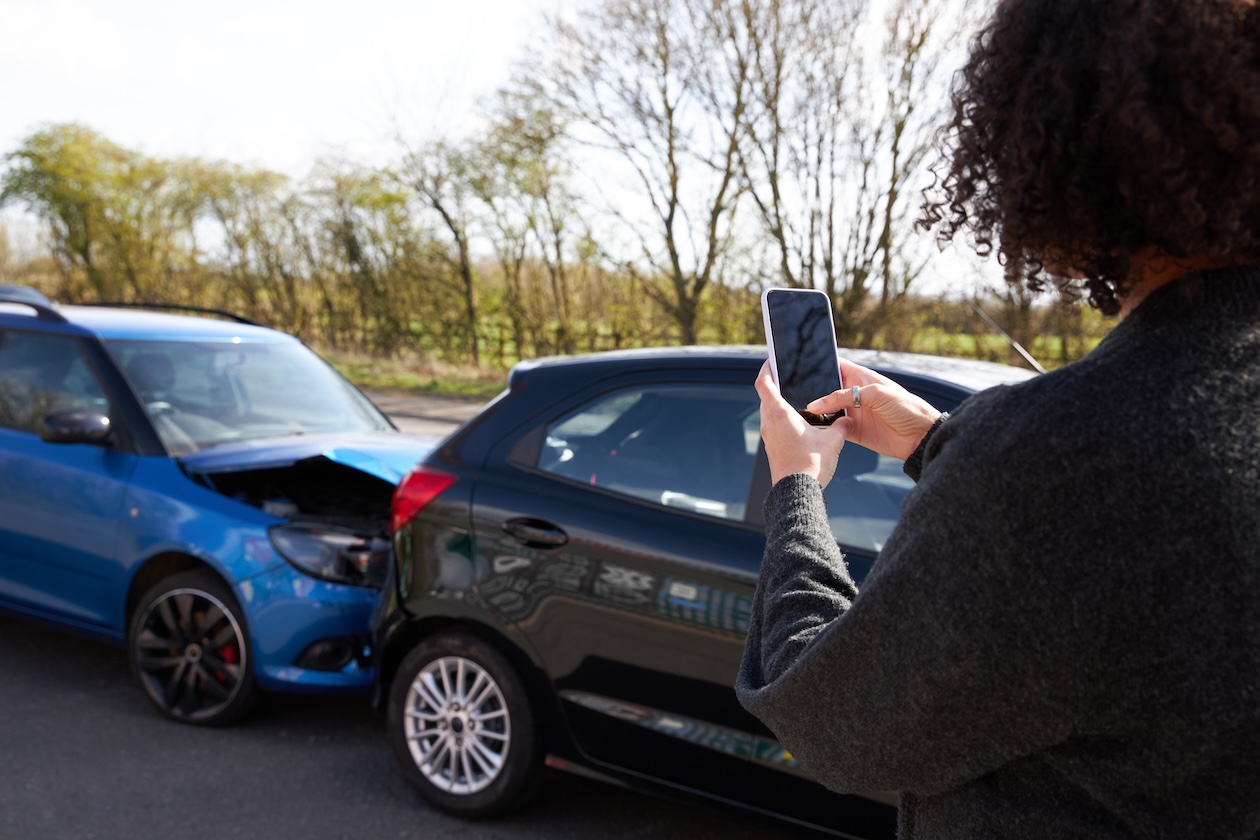
If possible, take a photo of the driver’s phone screen showing the app they are using. This can help prove whether they were online or offline at the time of impact.
Take Photos of the Scene
Collect visual evidence, including:
- Damage to both vehicles
- The driver’s phone or mounted app screen (if visible)
- Weather and road conditions
- Traffic signals or hazards
- License plates
- Debris and skid marks
These details help reconstruct how the crash occurred and can be critical when companies try to deny responsibility.
Gather Witness Information
Delivery and rideshare crashes often occur in busy areas. Witness testimony may help establish:
- Driver behavior before the crash
- Whether the driver was stopped illegally
- Speed, distraction, or sudden lane changes
Collect names and contact details from anyone who saw the collision.
Seek Medical Attention
Some injuries, especially whiplash or soft tissue damage, may not appear immediately. Getting a medical evaluation protects your health and creates documentation for your claim.
Avoid Recorded Statements
Insurance companies representing rideshare or delivery companies may ask for a recorded statement. It is crucial to avoid agreeing to this before speaking with a Reno car accident lawyer. Insurers often use statements to minimize or deny claims.
How an Attorney Helps in Rideshare and Delivery Accident Cases
Because these cases involve multiple insurers and complex coverage rules, having legal guidance is extremely important. Hiring a car accident attorney can help victims avoid common pitfalls and navigate the claims process more effectively.
Investigates Which Insurance Policies Apply
One of the first steps an attorney takes is determining the driver’s status at the time of the crash. This may involve:
- Analyzing GPS data
- Reviewing app logs
- Obtaining crash reports
- Subpoenaing rideshare company records
This evidence helps identify which insurance policies must pay for damages.
Preserves Crucial Evidence
Rideshare and delivery companies keep detailed digital records, such as:
- Driver location history
- Trip acceptance and cancellation logs
- Route data
- Messages between drivers and customers
- App timestamps
An attorney can send preservation letters to prevent companies from deleting or altering this data.
Fights Back When Insurers Deny Coverage
Companies often argue that:
- The driver was not logged in
- The driver was using the vehicle for personal reasons
- The driver was in between deliveries
- The company is not liable for independent contractors
A lawyer can challenge these claims and prove the driver was actively working.
Calculates Full Damages
Injuries from these crashes can lead to:
- Medical bills
- Physical therapy
- Missed work
- Pain and suffering
- Long-term disability
An attorney evaluates the full impact of the crash and fights for fair compensation.
Handles Negotiation and Litigation
The lawyer negotiates with all involved insurers and, if necessary, files a lawsuit against:
- The driver
- The rideshare or delivery company
- Third-party companies
- Government agencies
Victims who try to handle the process alone often receive lower settlements because they are unfamiliar with how coverage tiers work or how to dispute “off-duty” claims.
Common Mistakes Victims Make After Being Hit by a Rideshare or Delivery Driver
Many victims unknowingly make decisions that damage their claims. These are the most common errors to avoid.
Accepting a Quick Lowball Settlement
Companies often offer small early settlements, hoping victims will accept before understanding the full extent of their injuries or the value of their case.
Talking Directly to the Company or Their Insurer
Speaking to insurers without legal advice can lead to misstatements that hurt your claim. Adjusters may ask leading questions or request recorded statements.
Not Collecting Enough Evidence
Failing to document the scene, the driver’s app status, or the road conditions can make it harder to prove liability.
Not Seeking Medical Care
Delaying treatment gives the insurer an opportunity to argue that the injuries were not caused by the crash.
Assuming Personal Insurance Will Cover Everything
Most personal policies exclude business use, which leaves many victims surprised when claims are denied.
Schedule a Free Case Review with a Reno Injury Lawyer
Being hit by a rideshare or delivery driver creates challenges that most crash victims are not prepared for. Multiple insurers may be involved, and companies often dispute responsibility by claiming the driver was off duty or not logged into the app. Speaking with an experienced Reno injury lawyer can help you protect your rights, navigate the claims process, and pursue the compensation you deserve.
Brent Harsh Law understands the unique issues involved in rideshare and delivery vehicle crashes. The firm handles claims involving Uber, Lyft, DoorDash, Instacart, Amazon Flex, and other platforms and is familiar with the coverage tiers and tactics these companies use. If you were injured in a crash with one of these drivers, contact the firm today to schedule a free case review.
Frequently Asked Questions
Whose insurance is responsible when a rideshare driver hits me in Reno?
Insurance depends on what the rideshare driver was doing at the time of the crash. If the driver was offline and using their vehicle for personal reasons, their personal insurance applies. If they were logged into the app or accepting a ride request, the rideshare company’s insurance may kick in. These details are critical in a rideshare accident because coverage changes by the minute.
Do Uber or Lyft provide insurance if their driver causes the accident?
Yes, but the coverage varies. For a Lyft or Uber accident, the company provides tiered policies that depend on whether the driver was waiting for a ride, en route to pick up a passenger, or actively transporting a passenger. Uber and Lyft have million-dollar liability policies during active rides, but much lower limits when the driver is just online and waiting.
What if I were a passenger during the crash?
Passengers almost always have a strong claim for damages. You’re rarely considered at fault, so your medical bills, lost wages, and other losses can usually be recovered through the rideshare company’s insurance or the other driver’s insurer, depending on who caused the crash.
Can I file a claim if a delivery driver (DoorDash, Amazon Flex, Uber Eats) caused the collision?
Yes. Many delivery companies provide commercial coverage while drivers are working, but each company’s policy differs. Delivery accidents can involve multiple insurance companies at once: the driver’s personal policy, the company’s commercial policy, and sometimes the policy covering the vehicle they were using.
What if the rideshare driver blames another driver for the accident?
This happens often. When the rideshare driver and the other driver both deny fault, Nevada’s comparative negligence rules apply. You can still recover compensation as long as you’re less than 50 percent responsible. Evidence, video footage, and police reports become especially important in these cases.
How are accident claims handled when both drivers share fault?
Under comparative negligence, your compensation is reduced by your percentage of fault. If both the rideshare driver and the other driver contributed to the collision, insurers will argue over who pays what. These disputes can delay accident claims and increase the need for robust documentation.
Do the rules differ for rideshare accidents in Las Vegas?
Liability rules are the same statewide. The difference is volume: Las Vegas has more rideshare traffic and more high-density traffic patterns, while Reno sees more weather-related crashes. But the insurance rules for Uber and Lyft are identical in both cities.
What should I do right after being hit by a rideshare or delivery vehicle?
Document everything. Take photos of all vehicles, the rideshare driver’s app screen, license plates, road conditions, and your injuries. Get the driver’s contact info, the rideshare company name, and note whether they were on a ride request. Small details can make or break a rideshare accident claim.
Do I need an attorney for this type of crash?
Because rideshare and delivery accidents involve layered insurance policies and shifting liability, a car accident lawyer (or specifically a rideshare accident lawyer) is extremely helpful. They handle negotiations with insurance companies, gather evidence, and make sure you aren’t pushed into accepting less than you’re owed.

 Pursu Agency
