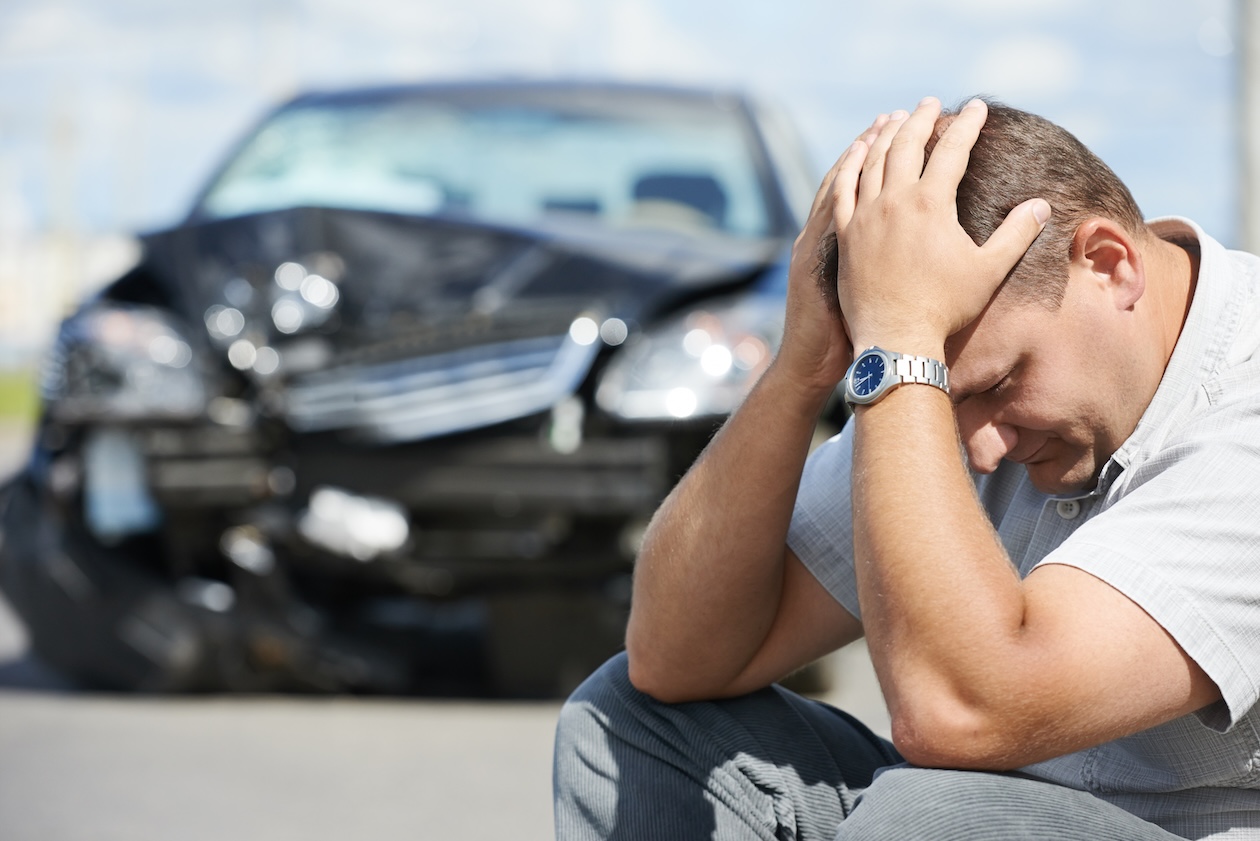
Many people walk away from a car accident wondering whether they still have a case because they think they may have contributed to the crash.
Maybe you were driving a few miles over the speed limit. Perhaps you misjudged a left turn or changed lanes just before the collision. Then the other driver’s insurance company tells you the accident was “partly your fault.”
At that point, many accident victims assume they are no longer entitled to compensation. Fortunately, that’s not always true.
Nevada follows a legal rule known as modified comparative negligence, which allows injured victims to recover compensation even if they share some responsibility for the accident. However, the amount you can recover depends on your percentage of fault.
Understanding how Nevada’s comparative negligence law works can help you make informed decisions after a crash and avoid accepting blame that isn’t supported by the evidence. An experienced Reno car accident lawyer can investigate the collision, preserve evidence, communicate with insurance companies, and advocate for a fair assessment of liability.
What Does “Partially At Fault” Mean After a Car Accident?
Being partially at fault means that more than one person contributed to causing the accident.
Car accidents are rarely as simple as one driver being completely responsible while the other did nothing wrong. In many crashes, investigators determine that both drivers made mistakes that contributed to the collision.
For example:
- One driver may have been speeding while the other failed to yield.
- A driver may have changed lanes without signaling while another driver was following too closely.
- One motorist may have entered an intersection after the light turned red while another was distracted.
When multiple drivers contribute to an accident, each may be assigned a percentage of fault based on the evidence.
These percentages become extremely important because they directly affect whether an injured person can recover compensation under Nevada law.
Understanding Nevada’s Comparative Negligence Law
Nevada uses a modified comparative negligence system, sometimes referred to as the 50% bar rule or 51% rule.
Under Nevada Revised Statutes (NRS) 41.141, an injured person may recover damages as long as they are not more than 50% responsible for the accident.
That means:
- 0% at fault: You may pursue full compensation.
- 10% at fault: You may still recover compensation, reduced by 10%.
- 25% at fault: You may still recover compensation, reduced by 25%.
- 50% at fault: You may still recover compensation, reduced by 50%.
- 51% or more at fault: You generally cannot recover compensation from the other party.
This rule often surprises accident victims because many assume that any amount of fault prevents recovery. In Nevada, that’s simply not the case.
However, insurance companies frequently argue that injured drivers were more responsible than they actually were because increasing your percentage of fault reduces, or may completely eliminate, what they have to pay.
How Shared Fault Affects Compensation
Nevada’s comparative negligence law reduces your financial recovery based on your percentage of fault.
Here are some simple examples.
Example 1
- You suffer injuries resulting in damages totaling $100,000.
- You are found 20% at fault.
- Your compensation would be reduced by 20%.
- Recovery: $80,000
Example 2
- Your damages total $50,000.
- You are found 40% at fault.
- Your compensation would be reduced by 40%.
- Recovery: $30,000
Example 3
- Your damages total $200,000.
- You are found 50% at fault.
- You may still recover compensation.
- Recovery: $100,000
Example 4
- Your damages total $150,000.
- You are found 51% at fault.
- Because you are more responsible than the other driver, Nevada law generally bars recovery.
These examples illustrate why accurately determining fault is so important. Even a relatively small change in fault percentage can significantly affect the value of your claim.
Common Reno Car Accident Scenarios Involving Shared Fault
Many crashes involve disputes over who was responsible. Some accident types are especially likely to result in shared fault allegations.
Rear-End Accidents
Rear-end collisions often result in the following driver being presumed at fault, but liability isn’t always straightforward.
Shared fault may arise if:
- The lead vehicle stopped suddenly without reason.
- Brake lights were not functioning.
- A driver reversed unexpectedly.
- Hazard lights were not used during an emergency stop.
Insurance companies often investigate both drivers’ actions before assigning fault.
Left-Turn Accidents
Drivers making left turns generally must yield to oncoming traffic.
However, the oncoming driver may also share responsibility if they:
- Were speeding.
- Ran a red light.
- Drove without headlights at night.
- Were distracted before impact.
Determining fault often requires careful analysis of witness statements, vehicle damage, and intersection evidence.
Lane Change Collisions
Lane change accidents frequently involve competing stories.
One driver may claim:
- The other vehicle was in their blind spot.
- A turn signal wasn’t used.
- The other driver accelerated into the lane.
- Unsafe following distance contributed to the collision.
Without strong evidence, these cases can become one driver’s word against another’s.
Intersection Accidents
Intersections are among the most common locations for serious crashes.
Shared fault disputes may involve:
- Yellow-light timing.
- Failure to yield.
- Distracted driving.
- Excessive speed.
- Illegal turns.
- Running stop signs.
Traffic cameras, nearby surveillance footage, and eyewitnesses often become critical evidence.
Weather-Related Crashes
Rain, snow, smoke, ice, or reduced visibility do not automatically excuse negligent driving.
Drivers are expected to adjust their speed and driving behavior for road conditions.
An insurance company may argue that both drivers failed to operate safely during hazardous weather, leading to shared fault allegations.
How Insurance Companies Try to Shift Blame After an Accident
Insurance companies are businesses focused on minimizing payouts.
One of the most common ways adjusters reduce claim values is by arguing that the injured person was partially responsible for the crash.
They may claim you:
- Were speeding.
- Were distracted by your phone.
- Failed to brake soon enough.
- Didn’t wear your seat belt.
- Failed to signal.
- Changed lanes improperly.
- Could have avoided the accident.
Even if these allegations are only partially supported, or completely unsupported, they may influence settlement negotiations if not challenged.
Insurance adjusters often begin investigating immediately after an accident. Statements made in recorded interviews can sometimes be taken out of context or used to support arguments that increase your percentage of fault.
Before accepting blame or agreeing with an insurance company’s conclusions, it’s often wise to understand the evidence supporting those claims.
Evidence That Can Help Prove Fault
Strong evidence often determines whether fault percentages remain accurate.
The earlier evidence is preserved, the better.
Police Reports
Law enforcement officers document:
- Vehicle positions
- Driver statements
- Witness information
- Traffic citations
- Initial observations
Although police reports do not automatically determine legal liability, they often become important pieces of evidence during insurance negotiations.
Witness Statements
Independent witnesses can provide unbiased accounts of:
- Traffic signals
- Driver behavior
- Vehicle speeds
- Road conditions
- The sequence of events
Witness testimony may help resolve conflicting versions of what happened.
Traffic Camera Footage
Video evidence can be extremely valuable.
Footage may capture:
- Red-light violations
- Failure to yield
- Unsafe lane changes
- Speed
- Vehicle positioning before impact
Nearby businesses or residential security cameras may also record the collision.
Because video may be erased after a short period, obtaining it quickly is often important.
Photos and Videos From the Scene
Pictures taken immediately after the crash can preserve valuable evidence, including:
- Vehicle damage
- Skid marks
- Road conditions
- Weather
- Traffic signs
- Debris
- Intersection layouts
These details may later help accident reconstruction experts may evaluate how the collision occurred.
Vehicle Damage Analysis
The location and severity of vehicle damage often reveal important information about:
- Direction of travel
- Speed
- Angle of impact
- Sequence of collisions
Insurance companies and accident reconstruction professionals frequently use physical damage patterns when determining fault.
What To Do If the Insurance Company Says You Were Partially At Fault
Learning that an insurance company believes you were partially responsible can be frustrating, but it does not necessarily mean their conclusion is correct.
If an insurer claims you share fault:
- Avoid admitting fault before all the facts are known.
- Request an explanation of how fault was determined.
- Preserve photos, videos, medical records, and repair estimates.
- Avoid posting details about the accident on social media.
- Keep records of all communications with insurers.
- Consider consulting an attorney before accepting a settlement.
Insurance companies may revise their liability determinations after reviewing additional evidence.
Accepting an early settlement before fault is fully investigated could significantly affect the compensation available to you.
When To Contact a Reno Car Accident Lawyer
Fault disputes often become more complicated than accident victims expect.
An experienced car accident attorney Reno residents trust can investigate the collision, preserve evidence, communicate with insurance companies, and advocate for a fair assessment of liability.
You should consider contacting an attorney if:
- The insurance company says you were partially at fault.
- Liability is disputed.
- You suffered serious injuries.
- Multiple vehicles were involved.
- The insurer denied your claim.
- You received a settlement offer that seems too low.
- There are conflicting witness statements.
- Significant medical expenses or lost income are involved.
At Brent Harsh Law, we understand that insurance companies often look for ways to reduce or deny valid claims by placing more blame on injured drivers than the evidence supports. Our team thoroughly investigates every case, works with accident reconstruction experts when necessary, preserves critical evidence, and aggressively negotiates with insurers to pursue the maximum compensation available under Nevada law. If you’re unsure whether being partially at fault prevents you from recovering damages, we’re here to evaluate your case, explain your legal options, and fight to protect your rights every step of the way.

FAQ
Can I recover compensation if I was partially at fault for a car accident in Nevada?
Yes. Under Nevada’s modified comparative negligence law, you may still recover compensation if you were 50% or less at fault. Your recovery will generally be reduced by your percentage of responsibility.
What happens if I am found 50% at fault?
You may still recover compensation because Nevada allows recovery when your fault does not exceed 50%.
However, your damages will generally be reduced by your percentage of fault.
What happens if I am found 51% at fault?
If you are found 51% or more responsible, Nevada law generally prevents you from recovering compensation from the other party.
How is fault determined after a Nevada car accident?
Fault is determined by evaluating available evidence, including police reports, witness statements, photographs, surveillance footage, vehicle damage, accident reconstruction, traffic laws, and other relevant information. Insurance companies often make an initial determination, but legal fault may ultimately be resolved through settlement negotiations or litigation.
Can an insurance company incorrectly assign fault?
Yes. Insurance companies sometimes assign a higher percentage of fault to injured drivers than the evidence supports. Because reducing your compensation benefits the insurer financially, disputed liability is relatively common in personal injury claims.
Should I talk to a lawyer if fault is being disputed?
If fault is being disputed or the insurance company claims you were partially responsible, speaking with a Reno personal injury attorney can help you understand your legal options. An attorney can review the evidence, challenge unsupported fault allegations, negotiate with insurers, and work to protect your right to pursue compensation under Nevada law.
 Pursu Agency
